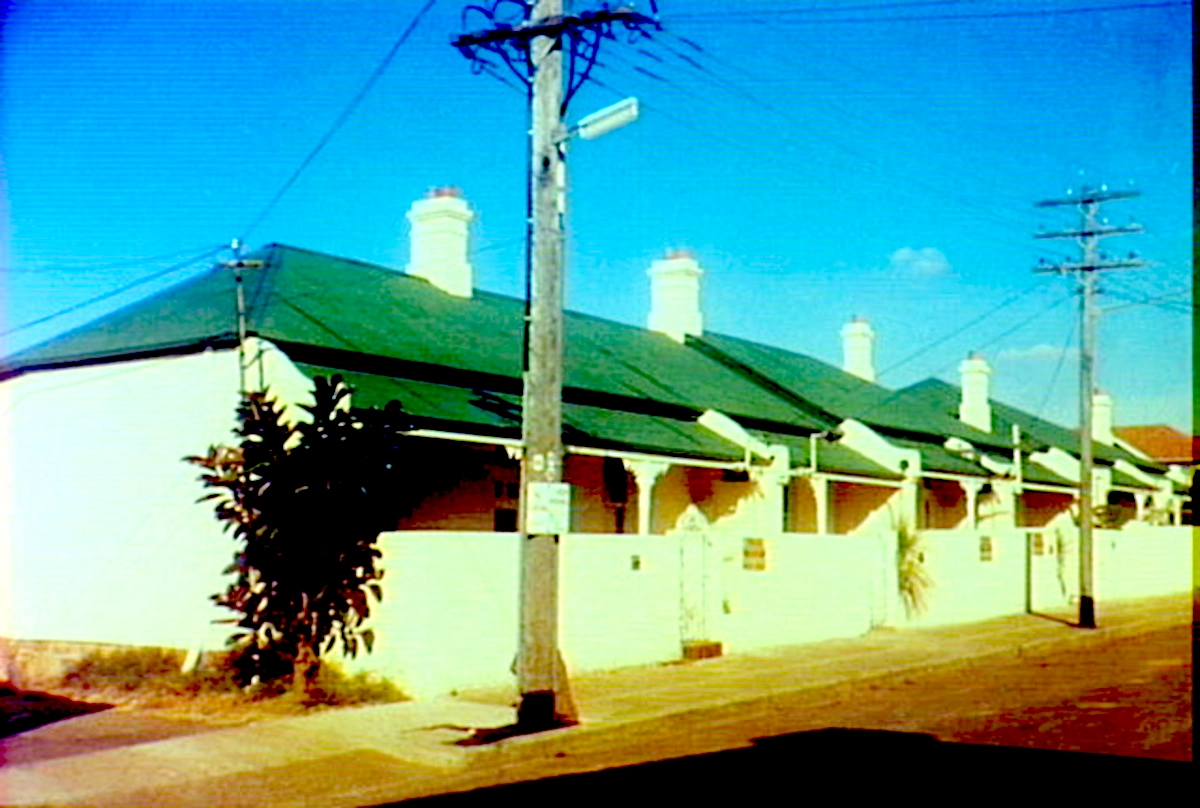
Bydown Terraces
Bydown Terraces, located at 27 to 37 Bydown St, Neutral Bay, stand as a rare intact example of workers cottages in this area. These charming and historic buildings are now under threat of demolition due to North Sydney Council DA 310/2025, which proposes an eight-storey building with three basement levels of parking. This development, if approved, would erase a significant piece of our local history and heritage that cannot be replaced.
The terraces represent a unique architectural and cultural history of Neutral Bay and are an irreplaceable part of our Military Road corridor’s character. Unlike anything else in the area, these cottages symbolise the lives and stories of the working-class community, telling tales of the past that deserve to be cherished and preserved.
We call upon the General Manager, Mayor, and Councillors of North Sydney to urgently impose an Interim Heritage Order to protect these invaluable structures. Their preservation is not only a matter of honouring our history but also of maintaining the unique cultural fabric of our community. By imposing an Interim Heritage Order, we can ensure that these cottages remain a part of Neutral Bay’s landscape for future generations to appreciate and learn from.
This is a critical moment for our community to act and save Bydown Terraces from being lost forever. The decision made today will impact the identity of Neutral Bay and its ability to weave our rich past into the future.
Sign this petition to join the force in preserving Bydown Terraces, safeguarding an important chapter of our history and preventing the erasure of our cultural heritage. Your voice can make a difference. Please sign and share to protect what makes Neutral Bay exceptional.
These terraces were previously considered for demolition but the previous North Sydney Council stopped that after a site meeting.
UPDATE 8.10.25
We have learnt that this has been put on the agenda for a Council meeting on 13.10.25 Glen Curyer from Neutral Precinct will be speaking at the meeting. The report for Council is available on their website. It doesn’t sound positive, it reads as if the Council’s Planning section is stretched approving new dwellings they have no time or resources to protect the old.
https://www.northsydney.nsw.gov.au/ecm/download/document-11662962
Update 12.10.25
Mosman Collective has published a well researched article on the proposed development and developer behind it, Yang Lui. They have also detailed the opposition. Viewable at Mosman Collective
If you would like to view the DA 310/2025 it is viewable at NSC you can also put in your objection there to the development (or support, if you prefer the eight stories!)
Be very clear, these terraces have stood for 130 years, but it will be this Council who decides if they survive or are demolished. The Low and Mid rise House reforms have encouraged development, these will not survive without heritage protection.
If you would like to let your GM, Mayor and Councillors know your feelings, even just one line, their details are:
Therese Cole, Chief Executive Officer <council@northsydney.nsw.gov.au>
Councillor Zoë Baker <mayor@northsydney.nsw.gov.au>
Councillor Godfrey Santer <cr.Godfrey.Santer@northsydney.nsw.gov.au>
Councillor Nicole Antonini <cr.nicole.antonini@northsydney.nsw.gov.au>
Councillor MaryAnn Beregi <cr.maryann.beregi@northsydney.nsw.gov.au>
Councillor Efi Carr <cr.efi.carr@northsydney.nsw.gov.au>
Councillor Chris Holding <cr.chris.holding@northsydney.nsw.gov.au>
Councillor Angus Hoy <cr.angus.hoy@northsydney.nsw.gov.au>
Councillor Jessica Keen <cr.jessica.keen@northsydney.nsw.gov.au>
Councillor James Spenceley <cr.James.Spenceley@northsydney.nsw.gov.au>
Councillor Shannon Welch <cr.Shannon.Welch@northsydney.nsw.gov.au>
Neutral Precinct has written to Councillors yesterday, once response gave us pause when they said they supported Heritage items but wondered if this was difficult in light of the State Government’s reforms.
Even if you don’t want to put in opposition to this DA or contact the Mayor or Councillors directly, if you could share this petition we would be grateful.
Next update after the Council meeting when we find out if the Councillors want to save or demolish these terraces!
Update 13.10.25
Positive news. Thank you to those who spoke at tonight’s Council meeting. The great news is a unanimous decision was made to employ a consultant to assess if a Interim Heritage Order would be successful. While not a IHO in itself, this is a good first step. Interesting meeting, Cr Keen put the motion forward for the IHO, Cr Beregi amended that to employ a consultant to assess and the Mayor spoke about saving items of heritage. After the developer’s heritage consultant spoke and said the terraces weren’t the best examples of their style and should be demolished Cr Spenceley made the excellent point that to only keep the best means only keeping one of anything. Cr Santer spoke about attending a good chiropractor in one of the terraces and how the interiors were excellent in that terrace, again in direct contrast to the developers consultant.
Early days but a positive start.
16.10.25
It seems everyone thinks these terraces are worth the effort of saving, except maybe a few Councillors & some Council Officers who are worried about the cost. The Australian Financial Review did a delightful article today on these terraces – https://www.afr.com/property/residential/last-row-standing-the-battle-for-neutral-bay-s-beautiful-cottages-20251015-p5n2mp
20.10.25
Just wanted to share some of the historical connection the community was able to provide between this row of terraces and the local community.
The Buildings, Builder and the Architect
– The dwellings are a group of intact federation workers cottages, similar in age and style to the cottages that were heritage listed in Parraween Street, Cremorne in 2024.
– The Bydown St dwellings demonstrate material and fabric consistent with the time of construction around 1908.
– The builder Frank Harpham was a founding member of the Middle Harbour Yacht Club, and responsible for creating its name. The club continues to this day.
– The builder Harpham was closely associated with a pre-eminent architectural company, TW Hodgson.
– Thomas W Hodson was an alderman of North Sydney Council, and elected mayor to that council for 3 consecutive terms.
– Frank Hodgson, brother and also a principal of TW Hodgson, was mayor of Mosman and the Grand Masonic Architect of NSW.
The case for heritage listing 27-37 Bydown Street Neutral Bay
The case for heritage listing 27-37 Bydown Street Neutral Bay “Heritage is a living part of our contemporary life. The objects, buildings, stories, songs, and
rituals become a framework and reference upon which we build the future. Acknowledging our heritage can bring a richness to life, strengthening culture and our understanding of where we have all come from.” Olivia Hyde, Acting Government Architect, The Design Guide for Heritage Issue No 2 – 2019, Heritage Council of NSW
https://www.planning.nsw.gov.au/sites/default/files/2023-10/design-guide-for-heritage.pdf Desk research was undertaken by the community, in October 2025 as a matter of
urgency, to identify evidence and rationale of the heritage significance of 27-37 Bydown Street. Prepared to support request to North Sydney Council to place an IHO
on the site.
A:
The Buildings, Builder and the Architect
1. The dwellings are a group of intact federation workers cottages, similar in age and style to the cottages that were heritage listed in Parraween Street, Cremorne in 2024.
2. The Bydown St dwellings demonstrate material and fabric consistent with the time of construction around 1908.
3. The builder Frank Harpham was a founding member of the Middle Harbour Yacht Club, and responsible for creating its name. The club continues to this day.
4. The builder Harpham was closely associated with a pre-eminent architectural company, TW Hodgson.
5. Thomas W Hodson was an alderman of North Sydney Council, and elected mayor to that council for 3 consecutive terms.
6. Frank Hodgson, brother and also a principal of TW Hodgson, was mayor of Mosman and the Grand Masonic Architect of NSW.
Source:
https://trove.nla.gov.au/newspaper/article/222917710?searchTerm=%22hodgson%20%22architect%22#
https://trove.nla.gov.au/newspaper/article/16007363?searchTerm=Harpham%20builder#
https://trove.nla.gov.au/newspaper/article/17159467?searchTerm=%22hodgson%20%22architect%22#
B:
The National Trust
Quote from the National Trust, written in response to the NSW Government housing reforms. “Working with heritage is one of the most sustainable and prudent ways to ensure a continuing variety of housing types in NSW.… heritage is not a barrier to the supply of new housing, and should in fact be part of the solution.”
https://www.nationaltrust.org.au/initiatives/nsw-housing-reforms/1
C:
Comparisons of existing local listings and/or conservation listings within North Sydney LGA.
Background Information: Criteria for satisfying Local heritage significance An item can be identified has having local heritage significance when it is important in
the local area for one or more of the following criteria:
a) it is important in the course, or pattern, of the local area’s cultural or natural history – known as historic significance
b) it has strong or special association with the life or works of a person or group of persons, of importance in the cultural or natural history in the local area – known as historic
associations
c) it is important in demonstrating aesthetic characteristics and/or a high degree of creative or technical achievement in the local area – known as aesthetic or technical significance
d) it has strong or special association with a particular community or cultural group in the area for social, cultural or spiritual reasons – known as social significance
e) it has potential to yield information that will contribute to an understanding of area’s cultural or natural history – known as research potential or educational significance
f) it possesses uncommon, rare or endangered aspects of the area’s cultural or natural history – known as rarity
g) it is important in demonstrating the principal characteristics of a class of the area’s cultural or natural places or cultural or natural environments – known as representative significance
Only one of the above criteria needs to be satisfied for an item to have local heritage
significance. An item is not excluded from having local significance because other
items with similar characteristics have already been heritage listed.
Source: https://www.environment.nsw.gov.au/sites/default/files/levels-of-heritage
significance.pdf
27-37 BYDOWN STREET: Using the above criteria based on research that exists to date,
the six dwellings may satisfy the following criterion:
a) Historic significance – it is important in the course, or pattern, of the local area’s cultural or natural history. The six cottages at 27-37 Bydown Street and surrounding contributory cottages opposite including 32 and 34 Bydown Street, demonstrate typical but important processes of subdivision and speculative development that occurred throughout the entire north shore during the later years of the nineteenth century and early years of the twentieth century
(d) Social Significance: it has strong or special association with a particular community or cultural group in the area for social, cultural or spiritual reasons Bydown Street is valued by local residents, for its historical character and intactness. Early
residents recorded as living within the dwellings have known associations with early settlers.
E.g. Albert and Henry Cheal: Cheal Lane, Cheal Park
Further research is needed to identify persons associated with the dwellings, providing
additional information indicating social significance.
e) Research potential – it has potential to yield information that will contribute to education
and an understanding of area’s cultural or natural history
2
The six cottages at 27-37 Bydown Street provide research potential on a local level in
relation to the history of the early development of the Cooperville Estate lands, the type of
persons who took advantage of the development opportunities offered and the roles the
original/early occupants played in the early settlement and expansion of Neutral Bay. The
dwellings may provide research potential for further information to be gained in relation to
the work and associates of the builders, Frank and Arthur Harpham.
f) Rare – it possesses uncommon, rare or endangered aspects of the area’s cultural or
natural history
These cottages on Bydown Street are a rare group of workers cottages that survive as early
20th century single-storey attached dwellings. Typical of workers cottages, these humble
dwellings were narrow in design with little/no ornamentation, and unadorned verandahs.
Essentially one room wide with a hallway running the length of the building, they represent a
form of construction favoured for its low building cost.
To the best of our knowledge, there are no other similar dwellings, as either a single item or
group, listed on the NSW Heritage site in Neutral Bay or neighbouring Cremorne, nor indeed
within the North Sydney LGA.
Further research is needed.
g) Representative – it is important in demonstrating the principal characteristics of a class of
the area’s cultural or natural places or cultural or natural environments
The Bydown Street cottages demonstrate typical but important processes of subdivision and
speculative development that occurred throughout the north shore during the late nineteenth
century and early twentieth century. The row of attached cottages at 27-37 Bydown Street
are representative of the early 20th century suburban residential development of the former
Cooperville Estate lands that resulted in the form, configuration and historical character of
the suburb of Neutral Bay and surrounding localities that survive today.
The earliest buildings in the Neutral Bay area were constructed on the foreshore. The first
known European dwelling in Neutral Bay was a cottage built for Alfred Thrupp, which dates
to around 1826. Dwellings were gradually built up the slope from the foreshore. In the
1880s Victorian Gothic villas were constructed, followed in the early 1900s by federation
houses, example the Bydown Street cottages (1908).
Source:
https://www.athomeinnorthsydney.com.au/first
dwellings.html#:~:text=There%20was%20good%20stone%20to,counted%20in%20the%201
856%20census.&text=Apart%20from%20two%20made%20of,colony%20was%20establishe
d%20in%201788.&text=At%20that%20time%20the%20north,just%20a%20few%20hundred
%20souls.
The style and scale of the 27-37 Bydown Street group of dwellings provides a clear
demonstration of a particular socioeconomic profile of residents from a working class
background, that existed in this specific area of Neutral Bay in the early 1900s. The
preservation of the dwellings, as well as the street and lane patterns, would help to record
the processes of subdivision as well as demonstrate customs and practices of the time, for
example through the service lanes at the back of properties. The Bydown Street setting
remains primarily residential, with the streetscape of the dwellings essentially unaltered in
design and fabric.
3
[This description aligns with NSC DCP 13.7 SUBDIVISION AND LOT AMALGAMATION: The
subdivision pattern typically reflects the area’s development history and underpins its
significance]
In form and detailing, the cottages provide a representative example of a modest,
substantially intact, row of single storey attached dwellings, displaying a number of the key
characteristics of the early 1900s. The cottages are a representative example of the work of
the Frank and Arthur Harpham, builders, who appear to have developed a number of
cottages throughout the former Cooperville Estate lands and elsewhere in Sydney.
All cottages have verandahs at the front entry which appear to be original in form and
provide distinctive architectural features. This aligns with the DCP 13.9.3 Verandahs and
balconies description:
Verandahs and balconies are characteristic elements of many housing styles in Australia.
Verandahs create patterns of light and shade, and give depth to the building envelope.
Verandahs are often distinctive architectural features of a building, and can be significant to
the character of many street elevations, reinforcing links between buildings.
Existing Comparisons with existing Local Heritage Items
Research conducted demonstrates that there are some examples of similar dwellings in the
LGA which have local heritage listings:
11 Armstrong Street CAMMERAY NSW 2062
“Good example of a late-Victorian small residence in the Victorian Georgian style. The fine
quality stonework contrasts with the working-class scale of the building, which is indirect
evidence of the nearby sandstone quarries of the period”
(a)High local significance
(f) This item is assessed as aesthetically rare regionally.
(g) This item is assessed as historically representative locally. This item is assessed as
socially representative locally.
Source: https://www.hms.heritage.nsw.gov.au/App/Item/ViewItem?itemId=2181018
1 Oak Street, North Sydney
“See under Don Bank Group NSHS0797. Important relics of early township in North Sydney,
which with ‘Don Bank’ house form an enclave of the smallest form of terrace houses in the
middle of large modern commercial buildings. Relic of one of the earliest private subdivsions
on the North Shore. Important relationship with ‘Don Bank’ in creation of an intimate
nineteenth century atmosphere and context for this early house”
(a)(c) (d) satisfied for local significance
(f) This item is assessed as aesthetically rare regionally.
Source: https://www.hms.heritage.nsw.gov.au/App/Item/ViewItem?itemId=2180800
Conclusion
The six cottages at 27-39 Bydown Street appear to satisfy at least four criteria for heritage
significance. There are no individual or groups of similar dwellings of workers cottages in
Neutral Bay or Cremorne. The Don Bank Group of cottages in North Sydney and 11
Armstrong Street, Cammeray may provide a good comparison as these items are described
as being “working-class scale” dwellings and have existing local heritage listings.
4
References
North Sydney Heritage Centre, Stanton Library
NSW Environment and Heritage: guideline Assessing Heritage Significance.
https://www.environment.nsw.gov.au/publications/levels-heritage-significance
NSW Environment and Heritage: Heritage database
https://www.environment.nsw.gov.au/topics/heritage/search-heritage-databases
Conservation Area Studies. Holtermann Estate A,B,C,D & Lady Hay Estate (Crows Nest
Road) North Sydney, March 1998
Author: Robert Staas, Wendy Thorp and Michael Wright
https://digital.library.sydney.edu.au/nodes/view/10000#idx263708
North Sydney Council: various documents
Parraween Street Planning Proposal (PP3-23) – Parraween Street Cremorne Heritage
Assessment Addendum
https://yoursay.northsydney.nsw.gov.au/pp-3-23-parraween-st
Late Information or Hidden Information?
The applicant for this DA had a Heritage Consultant speak at the Council meeting who implied it would have little effect on the Heritage listed working Fire Station nearby. His report said:
“The site is considerably visually separated from Neutral Bay Fire Station as both present to different street frontage and are well removed from one another. The works would make no changes to the fabric or curtilage of this heritage item which is interpretated principally from Yeo Street. Where a small portion of the works may be visible when viewing Neutral Bay Fire Station from its principal street frontage, it would be as a receding element.”
The applicant lodged on Friday the 17.10.25 just before closing for objections, the renders for this building. Obviously the new block being barely visible from the Heritage Fire Station, as the consultant said, would be good. We will just post the renders below, and let you make your mind up. I am sure the consultant would welcome donations to buy glasses.


